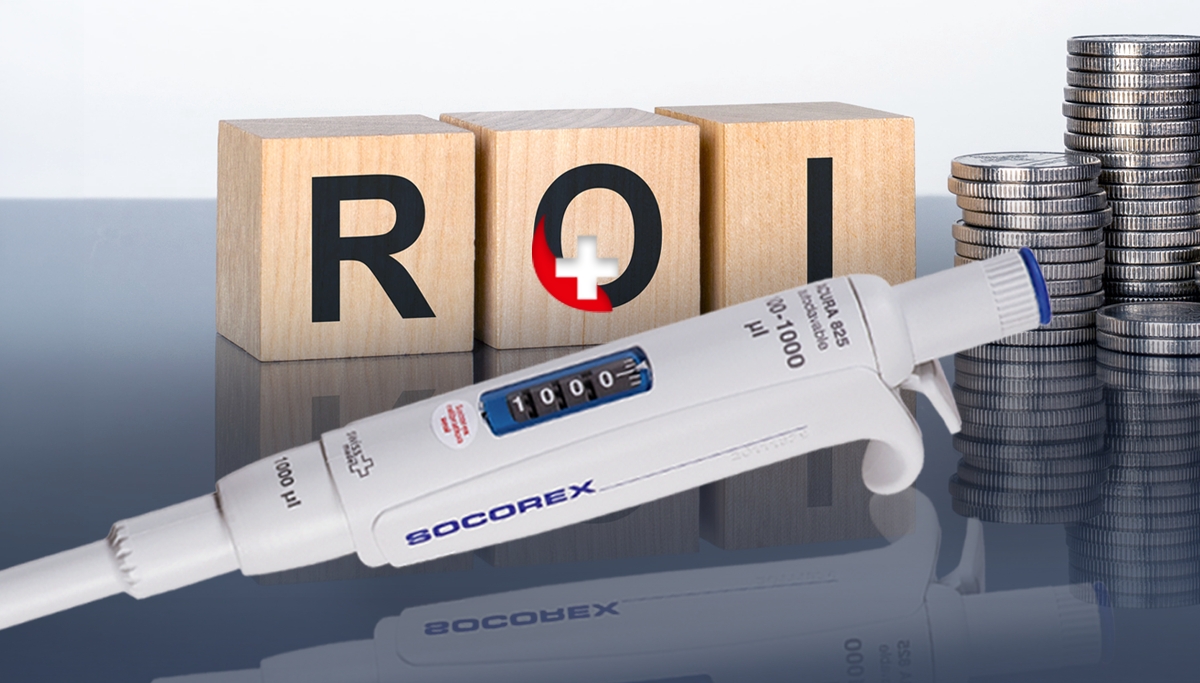
20 Oct Why is a Swiss made pipette worth the investment?
You are setting up a new laboratory or simply need to replace your old micropipettes. There is a lot to consider: price, durability, reliability, accessibility, post-purchase care and calibration... Pipette prices range anywhere from under 100 EUR to more than 300 EUR. Why is that? We hear this question a lot. So, here's an honest look at why a Swiss-made Acura manual costs premium and why that's the cheaper choice over the life of the instrument.
Pipette lifecycle and the maths nobody does
The sticker price on its own is the wrong number to compare. A much better one is cost per year of reliable service.
A budget pipette that drifts out of spec and gets binned after one or two years isn't cheap – it's expensive in small, repeated instalments. Socorex instruments are built to stay accurate and repairable for decades (as a proof, Socorex all-brand Service Center regularly receives 15+ year old Acura pipettes for routine check-ups). If you spread the cost across that lifespan, the "expensive" pipette quietly becomes the economical one.
How do you actually MAKE a pipette and what contributes to the price tag?
Here's something you most likely never read anywhere: how a pipette is made.
It all starts with a problem worth solving: maybe some laboratory activity would benefit from a new tool, or maybe the existing pipette needs a new feature. Regardless the issue, at Socorex, design and development of every instrument is lead in-house, prototyped, produced as local as possible and then assembled and quality-checked in our Ecublens facility in Switzerland. No shortcuts, no reverse-engineering.
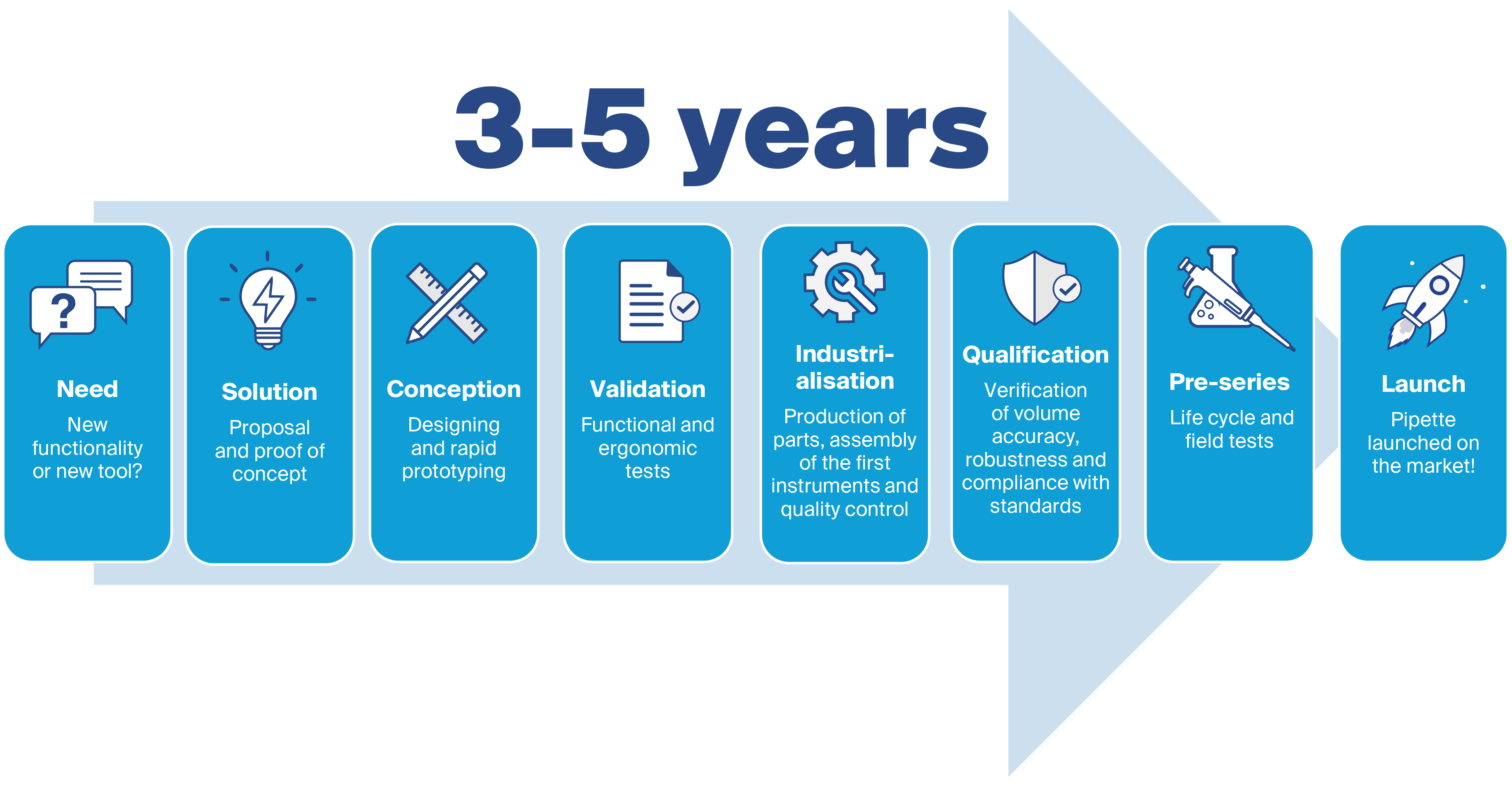 Fig. 1. An overview of stages of product development.
After coming up with a potential solution, the selected prototype gets approved, and production of components starts. All pieces that compose the pipette must pass through strict quality control check not only at the plastic injection partner but also internally, at Socorex, before they are assembled for the first time. If everything performs as planned, a pre-production run is launched. At this step, accuracy and robustness of the process are validated. Pipettes from the pre-production (also called pre-series batch) undergo another round of tests, this time more demanding, like fall tests, withstanding multiple autoclaving cycles, life cycle tests, etc... Additionally, pre-series instruments may also be shared with a few users to evaluate the product in real-world conditions. Finally, pilot lot is produced and ready to hit the shelves (of course once all the technical and marketing documentation is completed)!
As you can imagine, this process takes years, not months. Bringing a new Acura to the market is an endeavour of 3-5 years and, inevitably, this time contributes to the cost.
Another important factor influencing the price of the final instrument is material selection. At Socorex, we value and optimise for durability, and so Acura is built primarily from glass-fibre-reinforced polyamide and PVDF, chosen for chemical resistance, mechanical toughness and the ability to survive repeated autoclaving and UV exposure. Springs that make the plunger movement smooth, are thoroughly tested to provide a working life measured in the hundreds of thousands of pipetting cycles. None of this is the cheapest way to build a pipette but it is the way to build one that can be your ally for many years to come.
Last but not least, as mentioned above, the assembly and quality control are two key processes that happen in the Ecublens facility. Each instrument leaving the factory is equipped with an individual quality control certificate, compared to a lot-tested certificate as with some other brands. Moreover, Socorex employees, often working at Socorex for 10, 15 or even 20 years (!), are highly skilled and have an invaluable, deep, hands-on expertise.
Following industry standards and a few "extras"
A pipette has one non-negotiable job, and it is to transfer the right volume repeatedly. Acura is built and its calibration verified to ISO 8655, which is the global standard defining how pipettes (and other piston-operated instruments) should be manufactured and tested for accuracy. Adhering to these requirements, contributes to the overall quality and reliability of measurements using such instrument.
Socorex facility is regularly subject to internal and external audits to uphold the quality we stand for and that our customers demand. Furthermore, Socorex support does not end the moment a pipette is sold – customer service, technical and marketing assistance remain available for trainings, problem solving and more.
So how do you choose a pipette?
To make the right choice, ask yourself a few questions:
- Are your assays qualitative or quantitative?
- Are the reagents you transfer very expensive?
- Is after-sales support important for you?
- Do you work in a regulated, certified environment with stringent QA requirements?
- Do you want to be able to easily disassemble the pipette for cleaning and maintenance?
- Is the possibility to autoclave the pipette important to you?
- Do you want to maximise the freedom to choose your tips?
- Did you nod along to more than a couple? Then Acura might be just the right (and wisest) choice.
The features you'll only find in Acura manual
Justip™ — the universal tip fitting solution.
If your tips are ordered centrally and they are subject to change every now and then, this one is a gamechanger. In a fraction of a second you can adjust the ejector height, so the tip always fits. Frustration free operation guaranteed.
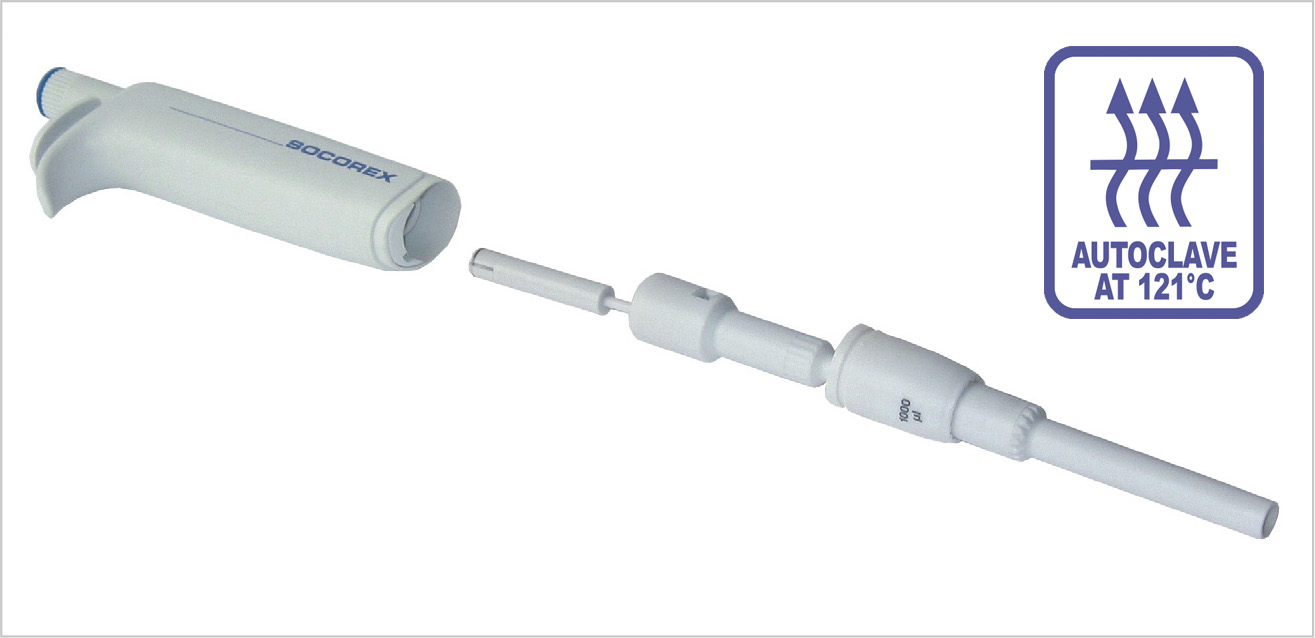
Five pieces, no tools, disassembled in 30 seconds. We've all done it: aspirated a bit too eagerly or released the plunger too abruptly and now the liquid got inside. Acura comes apart in five pieces with nothing but your hands. You can clean the lower section, autoclave it in one piece if you need to, and get back to work.
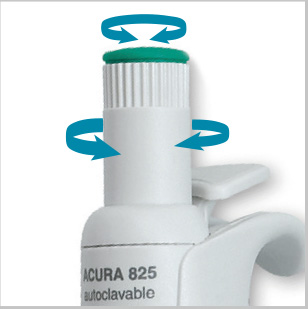 Easy and reliable volume setting. Micrometric volume setting is performed smoothly and precisely by turning plunger button. Finely machined click-stops and free rotating cap prevent any unwanted volume alteration without needing a separate locking mechanism. No accidental drift mid-session!
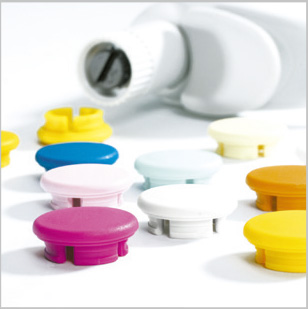 Smarties — don't touch my stuff. This is something for the organisational purists (a common species in the laboratory). Every colleague has their colour and marks their gear accordingly. Smarties lets you pick from 14 shades to personalise your pipettes or flag a set for a specific job: RNA-only, laminar-flow-only... you name it!
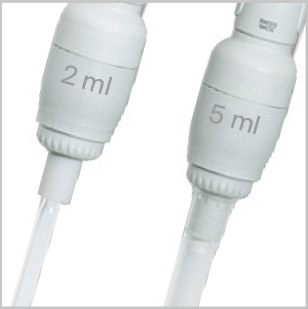 The Lego principle. The philosophy behind the manufacturing process of Acura pipettes is one of simplicity, modularity and interchangeability to maximise lifespan and application of the instrument. How does it manifest? For example, if you are working with butyl acetate, ethyl chloride or other chemicals reacting with polypropylene, you can adapt Acura manual macro pipettes to use glass Pasteur pipette instead of classic PP tip.
The only thing left is to try Acura for yourself
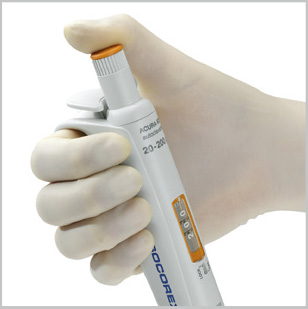 Not too light, not too heavy, working exceptionally smooth while fitting the hand comfortably. Users tell us the pipetting and ejection have a satisfying feel, and that the reliability over years is superb. But you shouldn't take our word for it: find your nearest distributor here or follow us on social media to stay posted on where to catch us at a trade show near you. By investing in Acura pipettes, you can be sure they are produced up to the highest quality standards and will last for decades. So, is it really expensive? Only if you measure it by the year. Measure it by the years you keep it, and it's the smartest line in your budget.

